Long-Term Operational Demands in High-Traffic Facilities
High-traffic facilities—ranging from transit stations, airports, and commercial complexes to educational campuses—require access control systems capable of sustained, uninterrupted operation over months and years. Even minor inconsistencies in swing gate behavior can accumulate into operational disruptions, increased maintenance, or downtime.
Failure to maintain consistent operation impacts pedestrian flow, facility security, and overall operational efficiency. Consequently, reliability metrics and lifecycle considerations are becoming key factors in the selection of swing gate systems.
Common Failure Points and Operational Challenges
Across high-demand environments, access control systems commonly encounter issues such as:
-
Mechanical wear on hinges, arms, and transmission components
-
Motor fatigue due to continuous start-stop cycles
-
Control logic drift, leading to inconsistent opening or closing behavior
-
Integration failures with other systems, including security, ticketing, or building management platforms
These failure points underscore the importance of selecting solutions that balance mechanical durability with advanced control technology.
Servo-Controlled Swing Gates Address Long-Term Reliability
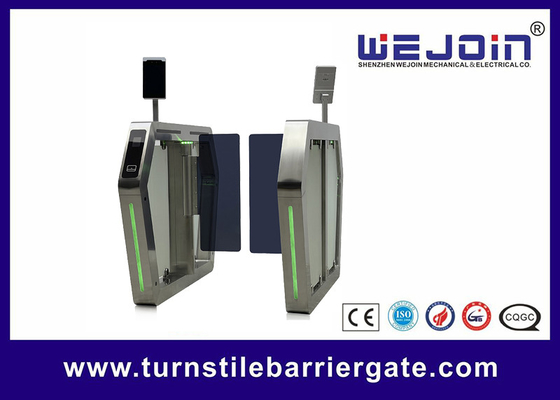
Servo-driven swing gates offer a combination of closed-loop motion control and precise actuation, which helps mitigate long-term operational risks.
Reduced Mechanical Stress
By controlling acceleration and deceleration profiles, servo systems limit sudden torque changes, reducing stress on moving parts and prolonging component life.
Consistent Motion Over Extended Cycles
Servo control compensates for gradual changes in load or wear, ensuring gate motion remains predictable over tens of thousands of cycles. This contributes to stable operation across the full lifecycle of the system.
Predictive Maintenance and Diagnostics
Advanced servo systems often include real-time feedback and status reporting, allowing maintenance teams to identify potential issues before failures occur. This enables proactive interventions, reducing unplanned downtime and extending operational reliability.
Integration and Operational Considerations
High-traffic facilities increasingly demand gates that integrate smoothly with multiple systems. Servo swing gates that support standardized communication protocols and provide diagnostic data improve the overall reliability of the access control ecosystem.
Key selection considerations include:
-
Gate stability under continuous high-frequency operation
-
Predictable motion across varying user loads
-
Compatibility with multi-system integration
-
Availability of operational data for maintenance planning
Industry Outlook
As high-traffic facilities prioritize long-term operational stability, servo-controlled swing gates are emerging as a preferred solution. By combining mechanical durability with adaptive motion control, these systems offer:
-
Reliable pedestrian flow management
-
Reduced maintenance demands
-
Consistent behavior over prolonged operation cycles
Facilities across transit, aviation, commercial, and educational sectors are increasingly incorporating these solutions into their access control strategies, recognizing that system reliability and longevity are as important as initial throughput performance.


 Your message must be between 20-3,000 characters!