Airport Access Control Faces Higher Consistency Expectations
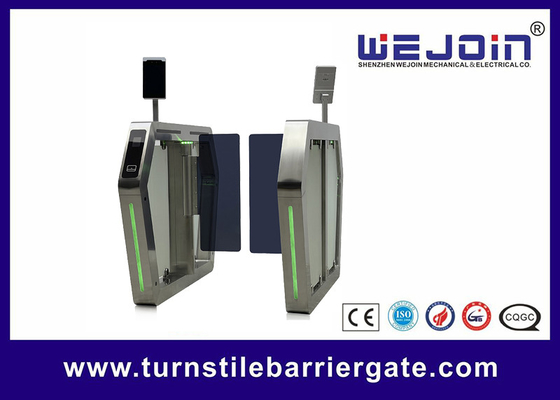
Airports represent one of the most demanding environments for pedestrian access control systems. Unlike office buildings or commercial facilities, airport terminals operate with continuous passenger flow, strict security protocols, and limited tolerance for disruption. In this context, consistency in swing gate operation has become a critical performance requirement rather than a secondary consideration.
Even minor variations in opening response, movement timing, or gate behavior across lanes can lead to congestion, passenger confusion, or manual intervention by staff. As passenger volumes grow and terminal layouts become more complex, airport operators are placing greater emphasis on predictable and uniform gate behavior across all access points.
Operational Pain Points in Airport Pedestrian Gates
From an operational standpoint, airport access gates face a unique combination of challenges:
- High and continuous throughput across extended operating hours
- Strict synchronization requirements between multiple adjacent lanes
- Integration with layered security systems, including boarding verification and staff access
- Low tolerance for operational inconsistency, especially during peak travel periods
Inconsistent gate motion—such as variations in opening speed or delayed response after authentication—can disrupt passenger flow and require staff intervention, which airports aim to minimize.
Why Consistency Has Become a Key Evaluation Metric
Traditionally, swing gate selection focused on basic parameters such as passage width and opening speed. However, in airport environments, consistency over time and across multiple units is increasingly prioritized.
Consistency in this context includes:
- Uniform response timing after authorization
- Stable opening and closing behavior under varying passenger loads
- Predictable recovery after temporary interruptions or emergency states
Achieving this level of consistency depends largely on the control architecture of the swing gate system rather than mechanical structure alone.
The Role of Control Systems in Gate Consistency
Modern airport access systems rely on precise coordination between authentication devices, central control platforms, and physical gate mechanisms. When gate control systems lack fine-grained motion control, even well-designed mechanical structures may exhibit performance drift over time.
Servo-controlled swing gate systems address this challenge through closed-loop control, enabling continuous adjustment of motion parameters based on real-time feedback. This approach supports more uniform behavior across multiple lanes, even as operating conditions change throughout the day.
Synchronization Across Multiple Access Lanes
In airport terminals, multiple swing gates often operate side by side. Consistent control logic allows each unit to follow identical motion profiles, reducing visible differences between lanes and helping maintain orderly passenger movement.
Stable Operation Under Variable Load Conditions
Passenger behavior varies widely, from single travelers to groups with luggage. Servo control enables the system to adapt smoothly to these variations without altering overall gate timing, supporting a more predictable access experience.
Integration Considerations in Airport Environments
Airports typically require access gates to interface with multiple systems, including security checkpoints, staff access controls, and emergency management platforms. Control systems that support standard communication protocols facilitate clearer integration and centralized monitoring.
From a selection perspective, gate systems that provide clearly defined operational parameters and feedback signals are better suited for environments where compliance and traceability are important.
Evolving Selection Criteria for Airport Swing Gates
As airport infrastructure continues to expand and modernize, selection criteria for swing gate systems are shifting toward long-term operational behavior. Engineering and procurement teams increasingly assess:
- Consistency of gate response across all lanes
- Stability of motion over prolonged continuous operation
- Compatibility with centralized monitoring and control systems
- Defined operational limits under normal and emergency conditions
This evolution reflects a broader industry recognition that consistent access control performance is essential to maintaining passenger flow and security standards.
Industry Outlook
In airport access control, the focus is moving beyond individual device specifications toward system-wide consistency. As control technologies evolve, swing gate systems with advanced motion control are being evaluated as part of a wider effort to ensure predictable, reliable pedestrian movement in high-demand aviation environments.


 Your message must be between 20-3,000 characters!