High Operational Demands in Transit Environments
Transit stations, including metro, light rail, and bus terminals, operate under intense, continuous pedestrian flow throughout the day. Unlike commercial or office facilities, these stations cannot pause for maintenance or recalibration during operational hours, placing exceptional demands on access control systems.
Traditional swing gate mechanisms often struggle under high-frequency, non-stop operation, leading to inconsistent opening cycles, delayed response, and increased maintenance requirements. These challenges have made continuous operational reliability a primary consideration in gate selection.
Common Pain Points in Continuous-Flow Transit Settings
Transit stations face unique operational stresses that can impact swing gate performance:
-
High-frequency activation, with thousands of cycles per day
-
Sustained mechanical load, especially during peak hours
-
Environmental factors, including vibration, temperature variations, and heavy foot traffic
-
Limited maintenance windows, requiring gates to remain operational over long periods
Failure to maintain consistent gate behavior under these conditions can disrupt passenger flow and compromise operational efficiency.
Why Servo-Controlled Gates Are Increasingly Favored
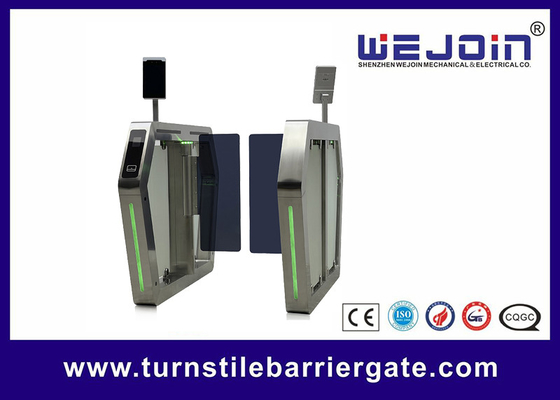
Servo-driven swing gates offer precise motion control and closed-loop feedback, which are particularly advantageous in continuous-use transit environments.
Stable Motion Under High-Frequency Operation
Servo systems manage acceleration and deceleration profiles carefully, minimizing abrupt forces on mechanical components. This allows gates to maintain consistent operation even during thousands of repeated cycles.
Adaptation to Variable Passenger Loads
Passenger behavior in transit stations varies from individuals with light baggage to groups with heavy items. Servo control compensates for these load variations, ensuring predictable gate movement without interruption.
Reduced Maintenance Pressure
The precise, feedback-driven motion of servo gates reduces mechanical wear and the need for frequent interventions. Additionally, system diagnostics provide early warnings of potential issues, supporting proactive maintenance planning.
Integration Considerations for Transit Stations
Transit environments often require gates to interface with ticketing, fare collection, and security systems. Servo-controlled gates that support standard communication protocols and provide operational feedback improve reliability and reduce integration complexity.
From a selection perspective, features that enhance system-level stability are increasingly prioritized over speed alone. Key considerations include:
-
Motion consistency under continuous high-frequency use
-
Reliability of gate operation across multiple lanes
-
Compatibility with station-wide control systems
-
Predictable response during peak passenger flows
Industry Outlook
Transit operators are increasingly viewing gate control as a critical factor in station efficiency. Continuous operation pressures drive interest in solutions that combine robust mechanical design with advanced motion control, such as servo-driven swing gates.
By ensuring predictable performance under sustained demand, these systems help maintain smooth passenger flow, reduce operational disruptions, and support long-term reliability in high-traffic transportation hubs.


 Your message must be between 20-3,000 characters!