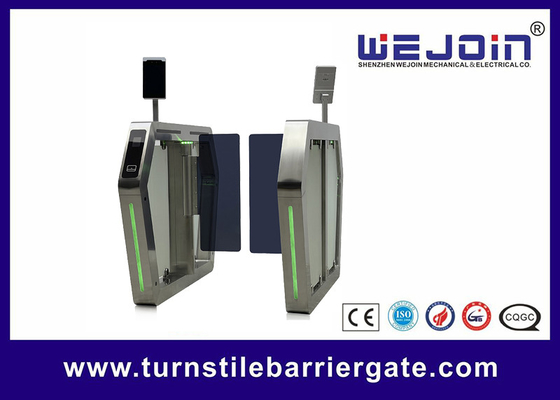
Rising Maintenance Pressure at Public Building Entrances
Public buildings such as government offices, hospitals, libraries, and municipal service centers rely heavily on controlled pedestrian access systems to manage daily visitor flow. Unlike commercial facilities with predictable usage patterns, these environments often experience irregular but sustained traffic, combined with extended operating hours.
Over time, operators have reported increasing maintenance frequency at entrance swing gates, including component wear, inconsistent movement, and unexpected downtime. These issues not only disrupt pedestrian flow but also increase operational costs and reliance on on-site technical support.
As a result, attention is gradually shifting from surface-level functionality toward the underlying drive and control methods used in swing gate systems.
Common Maintenance-Related Pain Points in Public Facilities
From an operational perspective, maintenance challenges in public building entrances typically stem from a combination of mechanical stress and control limitations:
-
High cumulative operating cycles due to daily public access
-
Inconsistent motion behavior after prolonged use
-
Increased wear on transmission components caused by abrupt start-stop actions
-
Difficulty diagnosing faults when control logic lacks feedback mechanisms
In many cases, these issues are not linked to access credentials or authentication devices, but rather to the way swing gates are driven and controlled under long-term use.
Limitations of Traditional Drive Methods
Conventional swing gate systems often rely on basic motor control or relay-based logic. While suitable for low to moderate traffic environments, these approaches can encounter limitations in public buildings where usage patterns are less predictable.
Without closed-loop control, traditional drive systems may struggle to maintain consistent torque and speed over time. This can lead to uneven gate movement, increased mechanical impact, and gradual degradation of key components. Maintenance teams may then face recurring adjustments or part replacements to keep systems operational.
These challenges have prompted facility operators and system integrators to reassess whether existing drive methods remain appropriate for long-term public access applications.
Servo-Controlled Swing Gates as a Technical Alternative
In response to maintenance concerns, servo-controlled swing gate systems are increasingly evaluated for public building deployments. The core distinction lies in the use of closed-loop servo control, which continuously monitors and adjusts gate movement during operation.
Reduced Mechanical Stress Through Controlled Motion
Servo systems allow smoother acceleration and deceleration profiles compared to basic motor drives. By minimizing sudden torque changes, mechanical stress on hinges, arms, and transmission components can be reduced, supporting longer service intervals.
Consistent Performance Over Extended Operation
Closed-loop feedback enables the system to compensate for gradual changes in load or resistance. In public buildings where operating conditions may vary throughout the day, this contributes to more consistent gate behavior without frequent manual recalibration.
Improved Fault Visibility for Maintenance Planning
Servo-based control architectures often provide clearer operational feedback. For maintenance teams, this can simplify fault identification and help distinguish between mechanical wear and external interference, supporting more predictable maintenance planning.
Changing Selection Criteria for Public Building Swing Gates
From an industry standpoint, swing gate selection in public facilities is increasingly guided by lifecycle considerations rather than initial configuration alone. Procurement and engineering teams are paying closer attention to:
-
Suitability of the drive system for long-term, high-cycle operation
-
Stability of gate motion after extended use
-
Impact of control methods on maintenance frequency
-
Availability of clearly defined operational parameters
This shift reflects a broader trend toward selecting access equipment based on durability and operational consistency, especially in environments where downtime directly affects public services.
Industry Outlook
As public buildings continue to modernize access infrastructure, drive and control methods are becoming a focal point of technical evaluation. Maintenance challenges observed in existing installations are encouraging a reassessment of traditional swing gate designs, with servo-controlled systems emerging as a practical response to long-term operational demands.
Rather than focusing solely on speed or appearance, industry discussions are increasingly centered on how drive technology influences maintenance behavior over the full service life of swing gate systems.


 Your message must be between 20-3,000 characters!