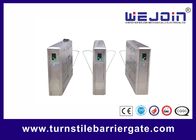
Increasing Access Control Pressure in Educational Environments
Schools and educational campuses present a distinct access control environment characterized by high pedestrian concentration within short time windows. Morning arrival, class transitions, and dismissal periods generate sharp traffic peaks that place significant demands on entrance and corridor gate systems.
Unlike transportation hubs or commercial buildings with continuous flow, school access points must handle sudden surges followed by long idle periods. This operating pattern places unique stress on swing gate systems, particularly in terms of start-stop consistency and mechanical stability.
As safety and access management standards continue to evolve in educational settings, the performance of swing gate systems during peak periods is becoming an increasingly important consideration.
Typical Access Control Pain Points in School Settings
In real-world deployments, several recurring issues are observed in school entrance and corridor access systems:
-
Irregular but intense usage peaks concentrated in short time frames
-
Inconsistent gate response during rapid consecutive authorizations
-
Increased mechanical wear caused by frequent start-stop cycles
-
Higher reliance on staff supervision when gate behavior becomes unpredictable
These challenges are often exacerbated by the need to accommodate diverse user groups, including students, staff, and visitors, each interacting with the system in slightly different ways.
Why Stability Matters More Than Speed in Schools
While access speed is often highlighted in public or transit environments, educational facilities place greater emphasis on stable and predictable gate behavior. During peak entry periods, inconsistent motion or delayed response can quickly lead to congestion, student clustering, or manual intervention by staff.
Stability in this context includes:
-
Uniform opening behavior across repeated cycles
-
Predictable response after authorization
-
Smooth motion that reduces sudden stops or rebounds
For school administrators and system integrators, these characteristics directly influence both operational efficiency and perceived safety.
Drive and Control Considerations for School Swing Gates
The ability of a swing gate to maintain stable operation under peak conditions is closely tied to its drive and control architecture. Traditional drive systems may struggle to deliver consistent performance when faced with rapid, repeated activations followed by idle periods.
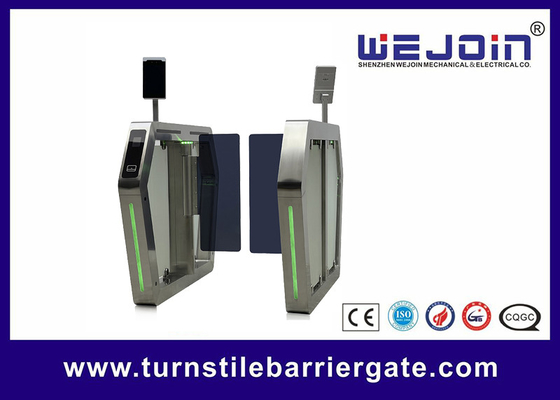
Servo-controlled swing gate systems are increasingly evaluated in educational environments due to their controlled motion profiles and feedback-based operation.
Smooth Start-Stop Behavior Under Repeated Activation
Servo control enables gradual acceleration and deceleration, which helps reduce abrupt motion during consecutive openings. This can be particularly beneficial in school settings, where groups of students may pass through gates in quick succession.
Reduced Sensitivity to User Interaction Variations
Students may push, hesitate, or pass through gates at different speeds. Closed-loop control allows the system to respond more predictably to these variations without deviating from defined motion parameters.
Support for Clear System Integration
School access systems often integrate with attendance tracking, visitor management, or emergency response protocols. Swing gates with standardized control interfaces support clearer system coordination and simplified management.
Selection Trends for Educational Facility Swing Gates
As access control systems in schools become more structured, selection criteria are shifting toward long-term operational behavior rather than basic throughput alone. Decision-makers increasingly evaluate:
-
Stability of gate motion during short-duration peak traffic
-
Suitability of the drive system for frequent start-stop cycles
-
Ease of supervision and reduced need for manual intervention
-
Clearly defined operating limits aligned with daily usage patterns
These factors reflect a growing focus on selecting swing gate systems that can perform reliably within the specific rhythm of educational environments.
Industry Perspective
Across the education sector, access control discussions are moving beyond basic entry restriction toward operational stability and predictability. As schools continue to balance safety, efficiency, and ease of management, swing gate systems with stable control characteristics are receiving closer attention during planning and upgrade cycles.
Rather than emphasizing maximum speed, the industry trend points toward solutions that can maintain consistent behavior during peak periods while supporting the broader operational needs of educational facilities.


 Your message must be between 20-3,000 characters!