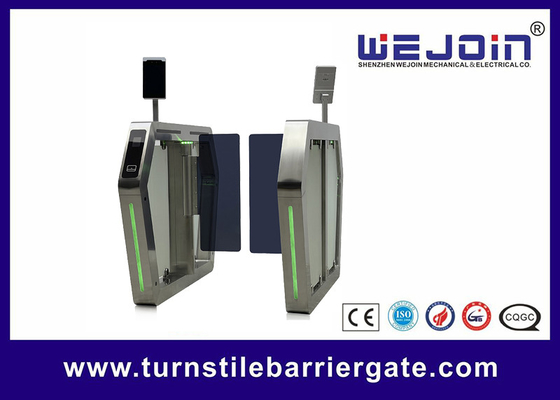
The Complexity of Access Control in Corporate Campuses
Modern corporate campuses often combine office buildings, research facilities, visitor centers, and parking structures within a single site. Managing access across such diverse spaces requires gates and turnstiles to integrate with multiple systems, including building management systems, security platforms, and employee credentialing systems.
While traditional swing gates focus primarily on mechanical operation, the increasing complexity of digital integration has elevated the importance of communication stability. Inconsistent or delayed signals can disrupt pedestrian flow, trigger false alarms, or require manual intervention by security personnel.
Key Pain Points in Multi-System Corporate Environments
Corporate campuses present several recurring operational challenges:
-
Multiple communication interfaces across building access, fire alarms, and IT networks
-
High frequency of simultaneous authorizations, such as group entries or shift changes
-
Potential signal conflicts or latency affecting gate motion
-
Difficulty diagnosing system-level issues without clear operational feedback
These factors underscore that stability in multi-system integration is as critical as mechanical reliability.
Why Communication Stability Matters
Even the most robust mechanical swing gate may underperform if the control system cannot maintain reliable communication with connected platforms. Delays in signal processing or inconsistent feedback can lead to:
-
Partial gate openings
-
Erratic movement under high load
-
Discrepancies between adjacent lanes
-
Unnecessary maintenance interventions
Maintaining consistent behavior across multiple gates and systems requires reliable, standardized communication protocols and closed-loop control.
Servo-Controlled Swing Gates for Enhanced Stability
Servo-driven swing gates provide a technical advantage in multi-system corporate environments. Their closed-loop motion control combined with communication feedback helps maintain consistent operation even when interfacing with complex IT or security platforms.
Synchronized Gate Operation Across Multiple Systems
By continuously monitoring gate position and operational status, servo systems ensure that motion parameters remain consistent across multiple gates, even when receiving simultaneous instructions from different systems.
Adaptive Response to Network Latency
Servo control allows gates to compensate for slight delays or variations in incoming control signals. This reduces the risk of inconsistent motion and ensures smooth pedestrian flow during high-volume periods.
Clear Operational Feedback for System Management
Advanced servo systems often provide status reporting and error logs. These tools allow IT and security teams to quickly identify whether issues stem from mechanical components, control logic, or communication conflicts.
Selection Considerations for Corporate Campus Swing Gates
When specifying swing gates for campuses with complex system integration, project stakeholders increasingly assess:
-
Gate responsiveness and motion consistency under multi-system commands
-
Compatibility with standard communication protocols and building management interfaces
-
Predictable operation during high-traffic periods and shift changes
-
Availability of diagnostic data for proactive maintenance
Prioritizing these factors helps ensure gates perform reliably across diverse operational scenarios.
Industry Outlook
Corporate campuses are driving a shift in access control priorities, where system integration stability becomes as important as mechanical reliability. As digital management platforms expand, servo-controlled swing gates are increasingly recognized for their ability to maintain consistent, predictable motion while interfacing with multiple control systems.
Selecting gates that combine robust mechanical design with adaptive, feedback-enabled control is now considered a best practice for high-demand, multi-system environments.


 Your message must be between 20-3,000 characters!